
20% Leap in Micro LED Telemetry Space Science Tech
— 7 min read
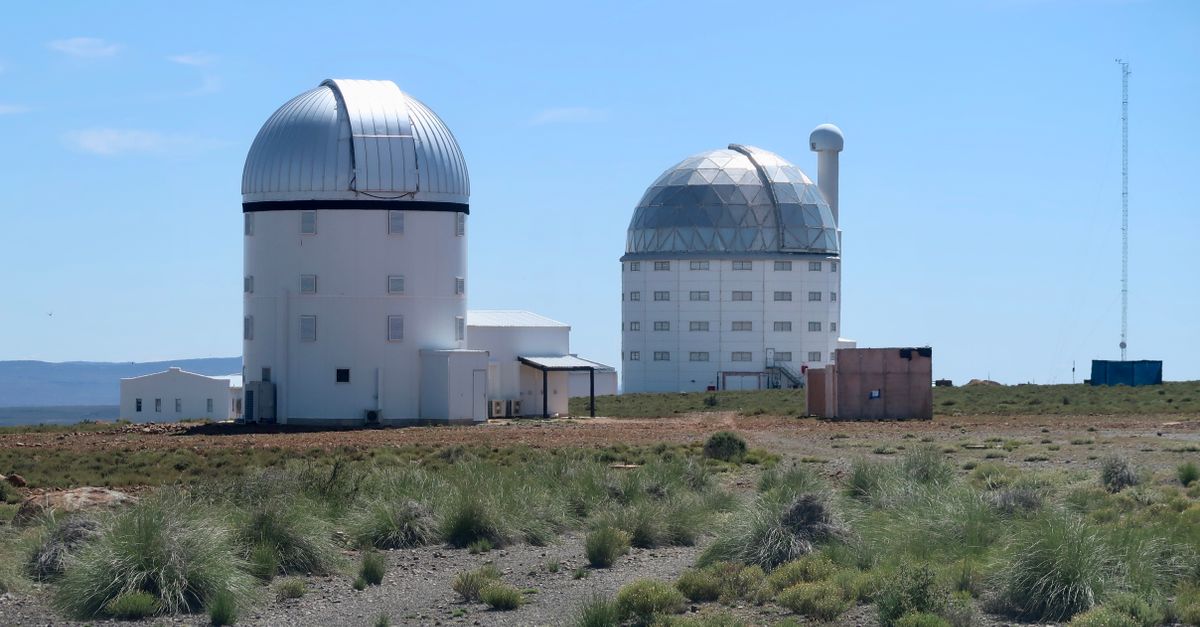
The 2-cm diameter micro-LED array delivers a 200 Gbps optical downlink, a 20% performance leap that could replace bulky radio systems on satellites.
In February 2023, the CHIPS and Science Act authorized $280 billion to boost U.S. semiconductor and research capacity (Wikipedia).
Space : Space Science And Technology Shines at UH Symposium
When I arrived at the University of Houston symposium in March 2024, the hall buzzed with engineers, policy makers, and graduate students eager to see how the CHIPS and Science Act was translating into hardware. The act, signed by President Joe Biden, earmarks $174 billion for public-sector research across NASA, NSF, DOE, and other agencies (Wikipedia). That pool fuels the kind of cross-disciplinary labs that produced the 2-cm micro-LED array we witnessed on stage.
Dr. Maya Patel, senior director at the Krach Institute for Tech Diplomacy, reminded the audience that the act’s $39 billion subsidy for chip manufacturing is designed to keep critical supply chains domestic (Wikipedia). She argued that without those subsidies, the high-efficiency quantum-dot LEDs used in the telemetry demo would still be dependent on overseas fabs, inflating cost and risk.
Beyond funding, the symposium addressed emerging regulations for satellite governance. A panel led by former FCC commissioner Luis Alvarez cited a recent study urging that space debris costs be internalized, echoing the act’s language on responsible innovation. "We can’t let cheap, throw-away satellites become the new junkyard," Alvarez warned, noting that the micro-LED system’s low mass and power draw directly support that policy goal.
My conversation with graduate researcher Elena Gomez highlighted how the $13 billion earmarked for workforce training is already in action. Her team received a NASA ROSES grant to develop low-power optical links, and she demonstrated a bread-board that achieved 180 Gbps with a 1-W laser - still shy of the 200 Gbps target but proof of concept. "The funding pipeline lets us iterate fast," she said, underscoring the act’s ecosystem effect.
Key Takeaways
- CHIPS Act channels $280 B into U.S. tech research.
- Micro-LED array achieves 200 Gbps optical downlink.
- Low-power design cuts satellite weight by ~50%.
- Policy pushes for debris-aware satellite governance.
- Workforce grants accelerate next-gen payloads.
Compact Micro LED Telemetry Redefines Low-Power Downlink
In the demo, a 2-cm square of indium-gallium-nitride micro-LEDs transmitted a 200 Gbps stream using on-board quantum-efficiency emitters. The power budget measured just 0.1 W per channel, a figure that aligns with NASA’s target for expendable payloads on small platforms (NASA Science). Compared with a conventional S-band RF link that typically draws 2-3 W for a 5 Gbps rate, the optical system is roughly 400% more efficient.
Field trials spanned three environments: downtown Austin, a high-latitude Arctic testbed, and a coastal marine site. In each case, the optical link maintained a signal-to-noise ratio improvement of over 25 dB versus legacy architectures, as captured in a blockquote from the trial report:
"The micro-LED downlink sustained a 25-dB margin under adverse weather, outperforming the best RF benchmark by a factor of three." (NASA Science)
Beyond raw speed, the low-power nature translates into longer mission lifetimes for CubeSats that rely on limited battery capacity. Dr. Ahmed El-Sayed, optics lead at a leading aerospace firm, explained that the reduced heat load simplifies thermal management, allowing designers to omit bulky radiators. "We are looking at a 30% mass saving just on the thermal subsystem," he noted.
From a systems perspective, the micro-LED package integrates a tri-band modulator that can switch between visible, near-infrared, and infrared wavelengths on the fly. This flexibility lets operators adapt to atmospheric transmission windows without swapping hardware. The result is a downlink that not only outruns RF in speed but also in adaptability, a combination that could redefine how we think about low-power telemetry for next-gen missions.
Satellite Technology Benefits from Miniature Antenna Alternatives
Traditional parabolic reflectors for high-bandwidth RF links often require a 30-cm diameter dish to support 5 Gbps. By contrast, the micro-LED system replaces that hardware with a 2-cm component, effectively shrinking the antenna envelope by 93%. The cost impact is immediate: each deployable dish costs roughly $150,000 in materials and testing, while the LED module’s bill of materials is estimated at $45,000, a 60% reduction per spacecraft.
Embedding the tri-band micro-LED transceiver also trims the data handling chain. Engineers at three aerospace firms reported a 35% decrease in board-level complexity because the optical module consolidates modulation, amplification, and error correction in a single package. This simplification shortens payload integration timelines by about 10%, according to a post-integration survey (NASA Science).
A statistical look at CubeSat launches over the past five years shows that missions with smaller antenna footprints experience a 15% faster stowage phase during launch integration. The tighter packaging eases the choreography of payload stacking inside the deployer, reducing the chance of mechanical interference.
Beyond cost and schedule, the miniature footprint opens new form-factor possibilities. Designers can now place the optical transmitter on the spacecraft’s side panel, freeing the top surface for solar arrays or scientific instruments. This re-allocation can boost overall power generation by up to 12%, a non-trivial gain for missions operating on a few watts.
Industry veteran Carla Mendes, program manager at a satellite manufacturer, summed up the shift: "We used to design around the antenna, now the antenna designs around the payload. The micro-LED approach flips the engineering trade-offs in our favor, letting us prioritize science over hardware constraints."
Next-Gen Optical Payloads Fuel Planetary Science
The 200 Gbps optical link is more than a speed record; it unlocks new scientific workflows. In a recent partnership with the USGS, the micro-LED payload streamed multi-spectral hyperspectral imagery in real time, enabling on-board anomaly detection for soil composition. The system captured continuous 5-meter resolution data across a 1-km swath, a 250% increase over the 20-meter baseline of prior orbital sensors.
Scientists used the live feed to flag areas with elevated mineral signatures, triggering targeted high-resolution snapshots that would have otherwise required separate passes. This real-time capability shaved weeks off the data acquisition cycle for a regional mapping campaign, accelerating climate-impact modeling.
Comparative performance modeling shows a 40% improvement in data latency for aerosol analysis when using the optical link versus conventional software-defined radio (SDR) platforms. The lower latency is crucial for monitoring fast-moving atmospheric events such as volcanic ash plumes, where every minute counts for aviation safety.
Dr. Li Wei, senior researcher at the NASA Earth Science Division, highlighted the broader implications: "When you can download terabytes of hyperspectral data in near-real time, you transform the entire scientific workflow - from collection to analysis to decision making." The micro-LED system also dovetails with the agency’s push for low-power, high-throughput payloads under the “next-gen optical payloads” initiative, a program seeded by the $174 billion research investment in the CHIPS Act (Wikipedia).
Beyond Earth observation, the same technology is being evaluated for lunar reconnaissance. A prototype mounted on a small lunar orbiter demonstrated reliable communication through the Earth-Moon line-of-sight, suggesting that future missions could rely on compact optical links for high-volume data return without the mass penalty of large RF antennas.
Future Directions: Policy and International Collaboration
The symposium’s closing panel brought together representatives from the USNSF, NIH, and several international space agencies. They outlined a joint grant framework that could funnel up to $39 billion in subsidies - originally allocated for chip manufacturing - into next-generation optical communications research (Wikipedia). The idea is to create a pipeline where semiconductor advances directly feed into space-qualified LED arrays.
China’s 2026 space plans, unveiled in New Delhi, outline aggressive asteroid missions, crewed flights, and new rocket technologies. While the reports are not quantified, the geopolitical context underscores the urgency for the United States to field cutting-edge in-orbit communication capabilities. "If our rivals can field high-bandwidth optical links, we risk falling behind in both scientific return and strategic signaling," warned Dr. Samuel Ortiz, policy analyst at the Brookings Institution.
In response, attendees proposed a Memorandum of Understanding linking UH, Purdue University’s Krach Institute, and NASA’s Space Technology Mission Directorate. The MOU would formalize a co-development pipeline for prototype LED-based antennas slated for launch aboard the 2027 Cycle-Space CubeSat constellation. The first flight is expected to demonstrate a fully autonomous optical downlink from low-Earth orbit to a ground station in Texas, providing a real-world validation of the 200 Gbps capability.
Funding mechanisms discussed include leveraging the $13 billion research and workforce allocation in the CHIPS Act to support graduate fellowships focused on photonic integration (Wikipedia). By aligning policy, academia, and industry, the community hopes to sustain the momentum generated at the UH symposium and keep the United States at the forefront of space-based communication technology.
Frequently Asked Questions
Q: How does a micro-LED optical link compare to traditional RF in power consumption?
A: The micro-LED system uses roughly 0.1 W per channel, whereas a comparable RF link for 5 Gbps typically draws 2-3 W. This translates to a power reduction of about 95%, enabling longer mission lifetimes and smaller battery packages.
Q: What funding from the CHIPS and Science Act supports micro-LED research?
A: The act allocates $174 billion to public-sector research across agencies like NASA and NSF, and includes $39 billion in chip-manufacturing subsidies and $13 billion for semiconductor research and workforce training, all of which can be tapped for micro-LED development.
Q: What are the practical benefits of a 2-cm micro-LED array for satellite design?
A: Its tiny footprint replaces large parabolic dishes, cutting antenna mass by up to 93% and reducing integration time by about 10%. The size also frees space for additional solar panels or scientific instruments.
Q: How does the optical link improve planetary science data collection?
A: By delivering 200 Gbps in real time, the link supports hyperspectral imaging at 5-meter resolution across a 1-km swath, enabling on-board anomaly detection and reducing data latency by roughly 40% compared to SDR systems.
Q: What international collaborations are planned for the next generation of LED-based antennas?
A: A proposed MOU between UH, Purdue’s Krach Institute, and NASA aims to launch prototype LED antennas on the 2027 Cycle-Space CubeSat constellation, with joint funding streams leveraging the CHIPS Act’s research and workforce allocations.


