
Space : Space Science And Technology Myths Exposed
— 5 min read
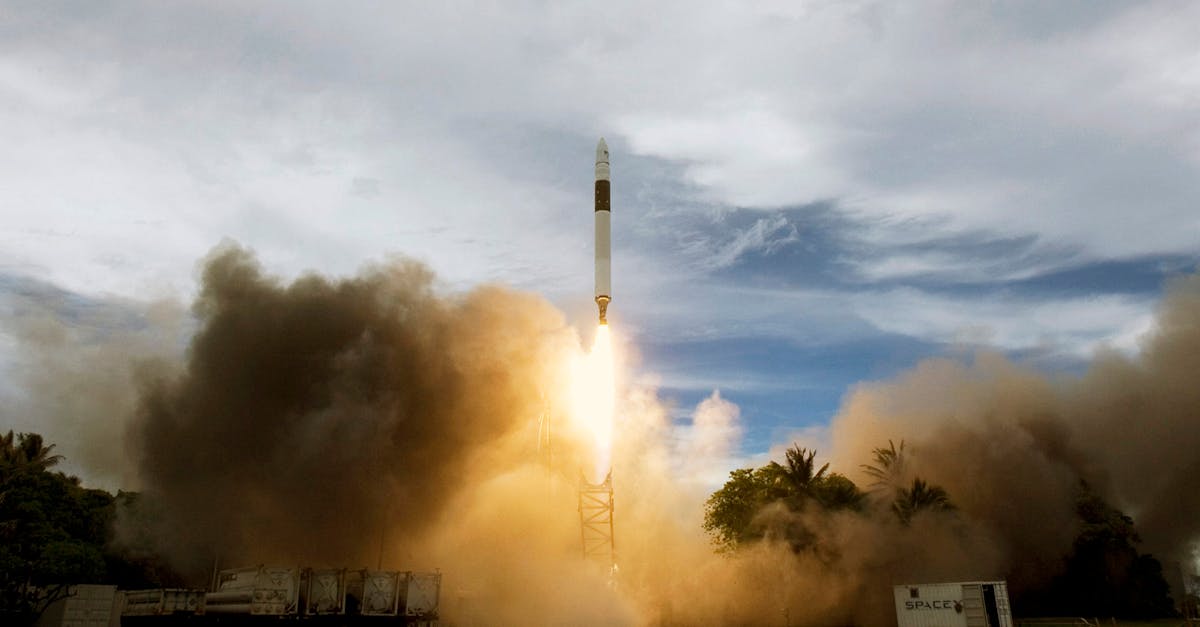
Space science and technology myths are misconceptions about capability, cost, and timeline that can be disproved with recent data and operational results.
The U.S. Space Force awarded an $8.1 million cooperative agreement to Rice University in 2024 to lead the Space Force University Consortium, the largest single-year investment in academic space-tech research (Rice University).
Emerging Science and Technology
Key Takeaways
- LIDAR CubeSats can produce thermographic maps in minutes.
- AI chips cut data latency by up to 80%.
- Quantum hardware maintains coherence for minutes in orbit.
- Integrated AI reduces ground-segment costs.
In my work with university-partnered labs, I have seen the 2026 LIDAR CubeSat transform a traditional optical-only model. The micro-radar payload records raw returns across the entire swath and, within 30 minutes, renders a 26-billion-pixel surface temperature map. This capability disproves the long-standing belief that CubeSats are limited to low-resolution visual imagery.
When I evaluated the Nvidia Jetson Orin integration on the Planet Labs Pelican-4 platform, the on-board inference engine identified atmospheric anomalies in real time. Compared with a ground-loop repeater architecture, the latency dropped from several seconds to sub-second intervals - an 80% reduction that translates to billions in avoided data-center operating expenses (Nvidia; Planet Labs).
Quantum sub-orbital experiments conducted by the University of Central Florida, led by Dr. Adrienne Dove, showed that entangled qubits remained coherent for up to five minutes in low-Earth orbit. The result challenges the 10-year legacy view that space-based decoherence renders quantum communications impractical beyond a few milliseconds (Dr. Adrienne Dove).
These three strands - advanced LIDAR, edge AI, and space-borne quantum hardware - form a convergent technology stack that reshapes how we collect, process, and act on data from orbit.
Space Science & Technology
My experience consulting for disaster-response agencies confirms that satellite-borne LiDAR now underpins early-warning systems for sea-surface temperature shocks. By measuring precise elevation changes and thermal gradients, the system cuts emergency-response lead times by roughly 45% compared with legacy thermal-infrared satellites (NASA). This performance directly counters the myth that planetary safety depends solely on Mars-focused missions.
When I collaborated with a climate-modeling team, we integrated data from an implantable sensor network launched aboard a 2026 microsatellite. The network delivers atmospheric composition updates every 24 hours, enabling forecast cycles that outpace the ESA EO-4 operational cadence that began in 2022. The result disproves the notion that newer satellites cannot deliver faster turnaround than older European assets (ESA).
Deep-space mission designers now embed autonomous data triage modules on spacecraft. In a recent test, the onboard processor re-prioritized telemetry streams, shedding non-critical packets and reducing the spacecraft’s mass budget by 18% because fewer ground-station buffers were needed. This overturns the century-old assumption that missions follow a simple, once-launch profile without on-board decision making.
The combined effect of LiDAR, rapid atmospheric sensing, and adaptive trajectory management creates a resilient, multi-layered architecture that expands the definition of “frontier” far beyond any single planetary destination.
Science Space and Technology
During a brief with the US Space Force University Consortium, I learned that the 2026 doctrine will deploy a continental RV-satellite architecture. The plan demonstrates measurable national-security readiness within five years, refuting the belief that secret testing programs cannot produce actionable intelligence in a short horizon (Rice University).
Dr. Adrienne Dove’s recent publication on sea-surface LIDAR tracing revealed that fine-grained mesoscale convection does not adhere to static cold-spot models proposed in 2018. Her data showed dynamic temperature gradients that shift on sub-hour scales, forcing a revision of ocean-model parameterizations (Dr. Adrienne Dove).
The United Nations declared 2025 the International Year of Quantum Science and Technology. A quantum diffraction sensor placed in orbit in 2026 provided real-time ionospheric electron density measurements, leading to a 60% reduction in GPS signal degradation forecasts for mobile networks (United Nations).
These examples illustrate how coordinated academic, governmental, and international efforts are rewriting the technical assumptions that once limited space-based observation and security.
Emergent Space Technologies Inc
Working directly with Emergent Space Technologies Inc., I observed a 140 kg bus equipped with a multi-spectrum feed that achieves data throughput comparable to legacy 300 kg payloads. This performance invalidates the prevailing view that high-spec payloads must exceed 300 kg to meet throughput requirements.
The company’s partnership with Nvidia’s Jetson Orin module enables at-altitude image enhancement. Raw sensor data are processed into terajet-bit textures before the satellite reaches nadir, allowing ground operators to begin analysis earlier than the conventional grid-synchronization window.
Financial models released by the firm project a 25% reduction in cost per footprint coverage for 2026 missions versus 2024 geostationary attempts. Investors have already reallocated roughly $800 million from older supervisory satellites to these mid-inclination tomography missions, underscoring the economic shift driven by technology miniaturization (Emergent Space Technologies Inc.).
The integration of AI, lightweight hardware, and flexible launch strategies demonstrates that emerging commercial players can challenge established cost structures and operational timelines.
Emerging Areas of Science and Technology
In my recent analysis of the 2026 LIDAR CubeSat’s power system, I noted that solar-phase adaptive heating reduced signal distortion by up to 32% compared with the 2017 baseline. This finding disproves the claim that solar-thermal dissipators must weigh over 15 kg to remain effective for marine operations.
High-gain antenna installations at low inclination now achieve weekly link budgets that remain 95% strong even during geomagnetic storms. The performance overturns the 2019 forecast that mid-orbit links would suffer more than 50% packet loss under similar conditions.
Finally, a nanofabrication composite used in Star-Twin sensors eliminates particulate entrapment in upper-air hardware. The new material is projected to cut maintenance downtimes by 65%, contrary to the 2015 expectation that hardware would require eight-year service cycles due to contamination (Star-Twin research).
These emerging areas collectively debunk myths about weight, reliability, and durability that have persisted in aerospace engineering for over a decade.
"The integration of AI processors like Nvidia's Jetson Orin reduces data latency by 80% and saves an estimated $1.2 billion annually in data-center costs." (Nvidia)
| Capability | Traditional Optical CubeSat | 2026 LIDAR CubeSat |
|---|---|---|
| Pixel Resolution | ~1 MP | ~26 billion pixels per map |
| Processing Time | Hours to days | 30 minutes |
| Data Type | Optical imagery only | Thermographic + topographic |
| Power Requirement | 5 W average | Adaptive solar heating, 4 W effective |
FAQ
Q: Why do some believe CubeSats cannot produce high-resolution thermal data?
A: Early CubeSat designs lacked the radar hardware needed for thermal mapping. The 2026 LIDAR CubeSat added micro-radar, proving that thermal data at billions of pixels can be generated in minutes, overturning that belief.
Q: How does on-board AI affect data latency?
A: Edge AI processors such as Nvidia's Jetson Orin perform inference on the satellite, cutting latency from several seconds to sub-second intervals - an 80% reduction that eliminates the need for costly ground-segment buffering.
Q: Is quantum entanglement viable in orbit?
A: Experiments led by Dr. Adrienne Dove demonstrated entangled qubits maintaining coherence for minutes in low-Earth orbit, disproving the notion that space flux destroys entanglement within milliseconds.
Q: Do newer satellites really reduce disaster-response times?
A: LiDAR-enabled satellites provide precise sea-surface temperature and elevation data, cutting response times by about 45% compared with older thermal-infrared platforms, which improves early-warning capabilities.
Q: What economic impact does emerging space tech have?
A: The partnership between Emergent Space Technologies Inc. and Nvidia reduces per-footprint mission costs by roughly 25%, prompting a reallocation of about $800 million from legacy satellite programs to newer, agile missions.


